"Shame and Money": Surviving the Class Divide in Eastern Europe
- Feb 1, 2026
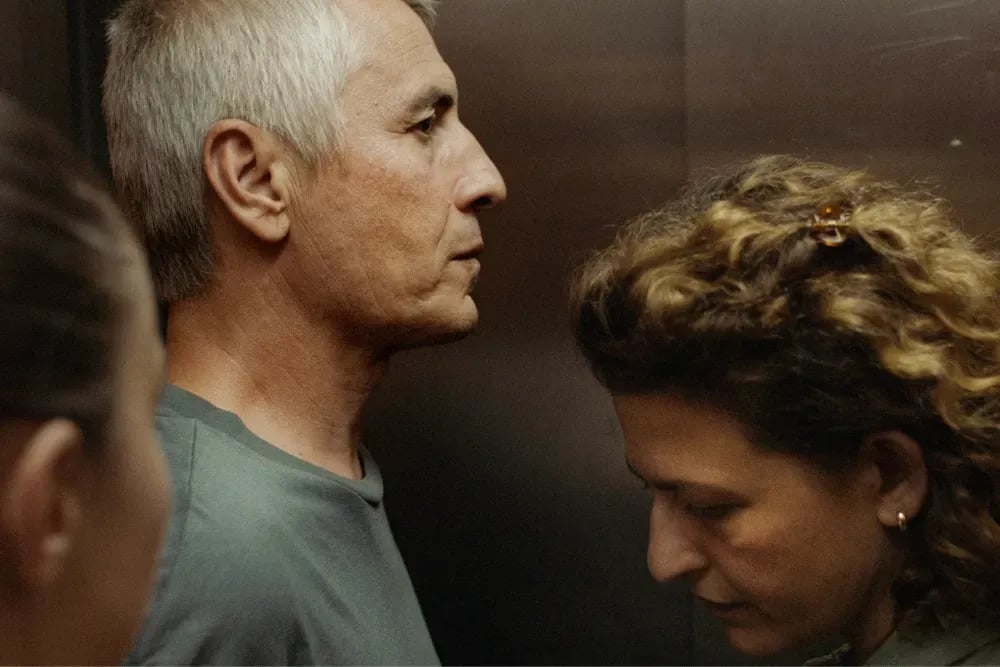
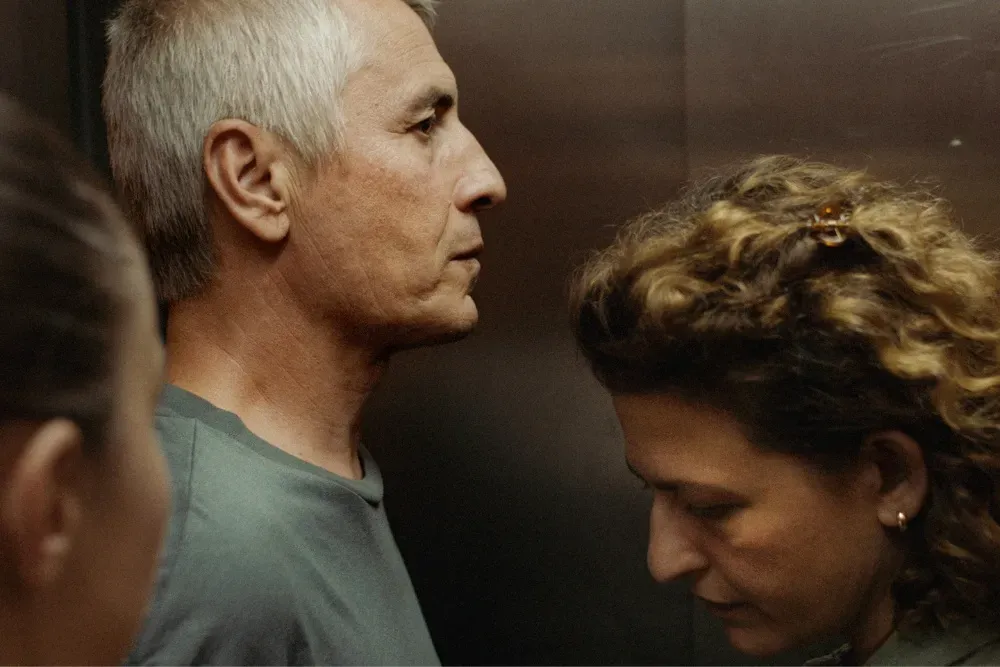
It starts with a simple question in Kosovan director Visar Morina’s film "Shame and Money", "Are you fine with sleeping at night?" asks an employer to a potential security guard. This question is a chimeric one, spawning different variations for the characters of this narrative based on their social and economic circumstances. It's nightfall in economic realms all across Europe, and we see this clearly through the restless nights of Shaban (Astrit Kabashi), a middle-aged man navigating the cutthroat urban job market, unable to find a moment's peace, regardless of whether he's on the clock or not. Those resting at the summit of capitalism, surprisingly, seem to sleep better than they probably ought to.
Waltzing off with the Grand Jury Prize at Sundance’s world cinema competition, Morina’s newest masterpiece shifts its lens back to its roots after exploring the Kosovan immigrant experience in Germany with an acerbic wit in his prior film, "Exile". "Shame and Money" offers a much grimmer, austere study of social class and wealth disparities. Shaban’s story might be characterized by a lack of hope or levity, but it remains complex, textured and human, largely due to a deeply nuanced performance from Kabashi.
The plot starts to unfold from a rural setting, close to the capital of Kosovo, Pristina. There, we meet the family of dairy farmer Shaban, his wife Hatixhe (Flonja Kodheli), their three little girls, and a tangle of familial conflicts. They're forced to uproot their lives due to unexpected financial complications, primarily due to Shaban’s freeloading younger brother Liridon (Tristan Halilaj), leaving them strapped for cash.

The family is now compelled to journey into the city, in search of work. Hatixhe’s sister Lina (Fiona Gllavica) provides the transitional bridge to the city, living a comfortable life funded by her entrepreneur husband Alban (Alban Ukaj). With the farm gone, Shaban and Hatixhe are tossed a lifeline – a job as cleaners at Alban's nightclub. However, Alban isn’t overly magnanimous in his dealings with his rural relatives, mirroring Lina’s own experiences of discrimination within her married household.
The situation becomes even more challenging when the income from Alban’s nightclub doesn't stretch far enough for their needs in the city, and their search for additional work hits walls at every turn. Even Alban and Lina aren’t above humiliating Shaban’s attempts at finding menial work while advising him to embellish his non-existent CV. Morina’s script doesn’t treat these characters as black and white constructs. Instead, he focuses on how each character finds a balance between personal corruption and survival in a society heavily impacted by economic disparities.
"Shame and Money" is punctuated by poignant folk music, a stark juxtaposition against the film’s otherwise tranquil soundtrack. This serves as a melancholic reminder of a simpler life left behind. Mazuch's cinematography, often favoring nervy, intimate tracking shots, gently ebbs and flows. In one stand-out scene, the camera encircles a lively musical gathering in Pristina’s central town square, stopping to capture the statue of Bill Clinton looking over the city from high above - a poignant emblem of a time when Eastern Europe’s economic ambitions looked different to the weary realities of today’s struggle for survival.